Future Trends in Composite Supply Costs
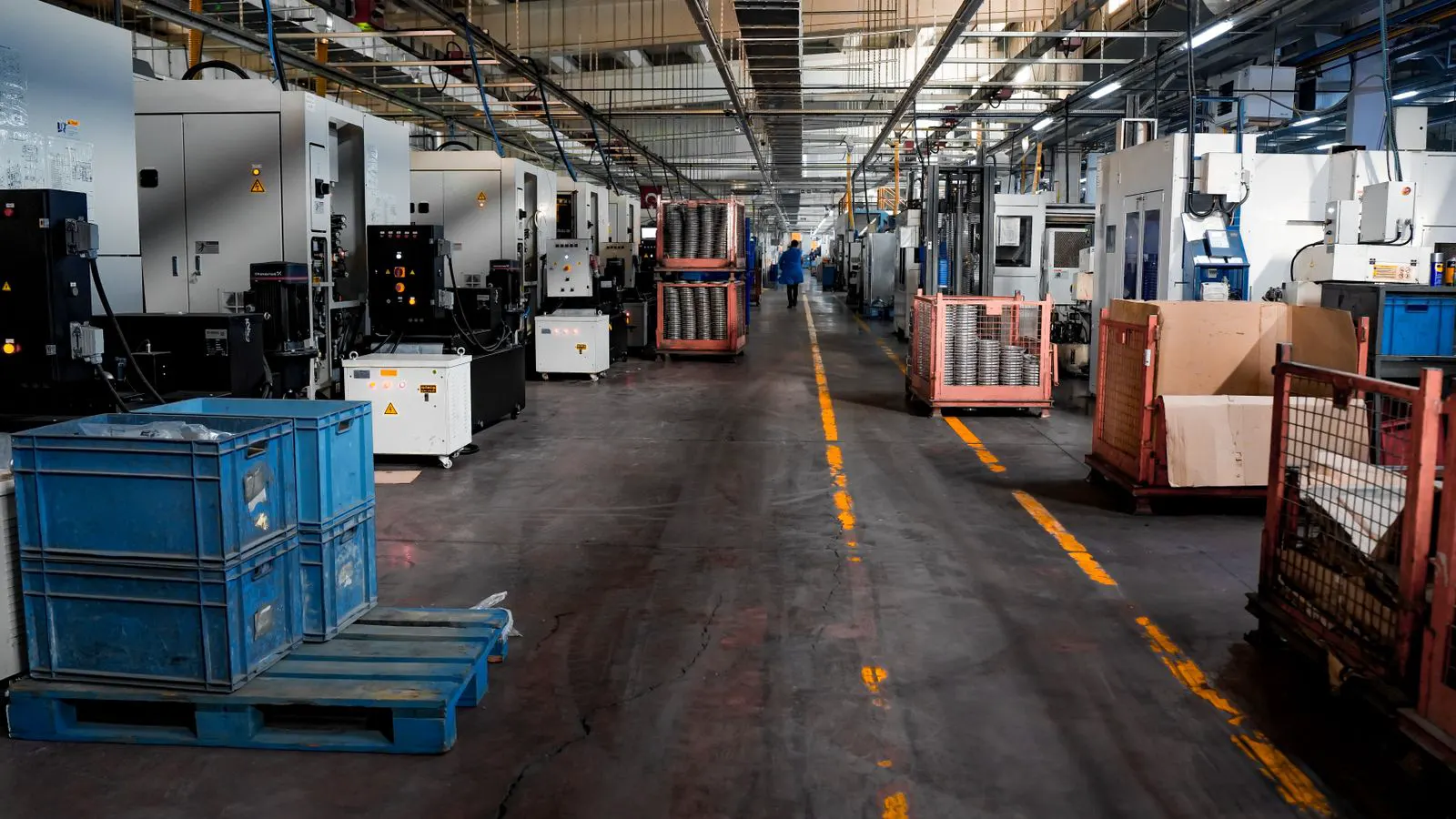
Future composite budgeting depends on tracking resin volatility, labor availability, and supply chain shifts. Buyers should plan for price swings, longer lead times, and quality checks by using multi-year forecasts and dual sourcing.
- Composite budgeting requires tracking resin volatility and labor costs, not just material prices.
- Long lead times for specialty resins and prepreg can disrupt project schedules.
- Dual sourcing and multi-year contracts help stabilize procurement budgets against market shifts.
- Quality checks and rework costs can quietly inflate the total cost of ownership.
Composite Material Procurement and Budgeting: Managing Volatility and Risk
Procurement teams often treat composite materials as a fixed line item. In practice, the cost of carbon fiber, glass fiber, and specialty resins moves with global energy prices, regional labor markets, and raw material availability. Future planning must treat these variables as active drivers, not static inputs.
Resin Volatility and Its Effect on Long-Term Budgets
Epoxy, vinyl ester, and polyimide resins are commodities tied to petrochemical feedstocks. When energy costs rise, resin prices follow. These shifts are not always linear. A single quarter can see a spike in raw material costs while another sees a dip due to oversupply.
For budgeting, this means single-point forecasts are weak. Instead, model three scenarios: baseline, upside, and downside. Assign a probability range to each. For example, if a resin is expected to move within ten percent of its current price, set a buffer in the budget. If the market is tighter, widen that buffer.
Resin suppliers often lock in pricing for specific volumes. If your volume is low, you may not get the same rate as a large aerospace or wind turbine buyer. This creates a gap between list price and actual cost. Consider the difference between a bulk purchase of 10,000 kilograms and a small order of 500 kilograms. The per-kilo price for the smaller order will likely be higher, not just because of shipping, but because the supplier cannot recover setup costs the same way.
The type of resin matters significantly. Standard epoxy resins are often traded in larger volumes and have more predictable pricing than specialty formulations. Polyimide resins, used in high-temperature aerospace applications, are more niche. Their supply chain is shorter and more concentrated. A disruption in the monomer supply for polyimide can halt production of specific laminates. This makes it harder to find substitutes quickly. If your design requires a high-temperature cure, you have fewer options. This limits your ability to switch suppliers if prices rise.
When negotiating with resin suppliers, look at the contract structure. Some agreements include price adjustment clauses based on published commodity indices. Others are fixed for a set period. A fixed price may seem stable, but it often comes with a higher initial rate to cover supplier risk. A variable price may start lower but can spike if feedstock costs jump. Compare the total cost of ownership over the contract period, not just the initial quote.
Labor Availability and Process Costs
Composite manufacturing is labor intensive. Hand layup, wet layup, and some autoclave processes require skilled technicians. As these workers move to other sectors or retire, labor costs rise.
Wage inflation is not the only factor. Training time matters. A new technician may take months to reach the speed and quality of a veteran. During that period, rework rates increase. Rework costs are often hidden in the final invoice. They appear as extra labor hours, extra material, or extended cycle times.
When building a budget, include a labor premium for specialized processes. If you are using vacuum bagging or resin transfer molding, the labor cost is lower than hand layup, but the equipment and setup costs are higher. The trade-off shifts as volume changes.
Hand layup allows for complex geometries and small batch production. It is flexible but slow. Each part requires a skilled technician to lay the fiber, apply the resin, and cure it. If a part has a complex shape, such as a curved panel or an internal rib, the technician must work carefully to avoid wrinkles and voids. This skill level drives the cost. If you need a one-off prototype, hand layup is often the only option. The cost per part is high, but the setup cost is low.
Resin transfer molding, or RTM, is a different story. RTM uses a mold and a vacuum bag to draw resin into a fiber preform. It is faster and more consistent than hand layup. However, it requires a mold. Making a mold can cost thousands or tens of thousands of dollars. If you only need ten parts, the mold cost makes RTM unviable. If you need ten thousand parts, RTM becomes the cheapest option per unit.
The labor cost also depends on the location of the factory. Manufacturing in regions with high wages will cost more per hour than manufacturing in regions with lower wages. However, lower wage regions may have less skilled labor. This can lead to higher rework rates. You must weigh the hourly rate against the quality of the output. A factory with slightly higher wages but lower rework rates may be cheaper in the long run.
Consider the specific process for your part. If your part is a simple flat panel, you can use automated layup. If your part is a complex structural component, you may need manual layup. The choice of process drives the labor cost. When budgeting, do not just use a generic labor rate. Use the rate for the specific process required. For example, the labor cost for an autoclave cure is different from the labor cost for an open mold cure. Autoclave requires a technician to load the bag, set the vacuum, and monitor the temperature and pressure. Open mold cure is simpler but less controlled. The quality difference can affect the final cost if rework is needed.
Supply Chain Concentration and Lead Time Risk
Many composite materials depend on a small number of global suppliers. A disruption in one region can delay shipments worldwide. This is not just a price issue. It is a schedule issue.
Lead times for prepreg and specialty fibers can stretch from a few weeks to several months. If a project has a hard deadline, a late shipment can force expedited freight. Expedited freight is expensive and adds stress to quality control.
To prepare, identify alternative suppliers early. Do not wait for a delay to react. A second source may cost more per unit, but it reduces the risk of a line stoppage. In some cases, holding safety stock is cheaper than the cost of a delayed launch.
Supply chain concentration is a major risk in the composite industry. Carbon fiber production is concentrated in a few regions. If a major producer in one country faces a power outage or a raw material shortage, it can affect prices globally. Glass fiber is more widely produced, but specialty grades, such as high-modulus glass, are still limited in supply.
Resin suppliers also have concentrated supply chains. Some resins are made in large plants that use specific chemicals. If the chemical supplier fails, the resin plant stops. This can cause a shortage. You may find that a standard epoxy resin is available, but a specific formulation for a high-temperature application is not.
Lead times are often longer than buyers expect. A standard order for carbon fiber cloth may take four to six weeks. A specialty fiber or a custom resin may take three to six months. If you are building a budget for a project with a fixed delivery date, you must order materials early. Late orders often incur rush fees. Rush fees can double the cost of the material.
When evaluating suppliers, ask about their lead times for different products. A supplier may have standard carbon fiber in stock, but custom cut-to-length prepreg may take longer. Ask about their safety stock levels. A supplier that holds more inventory can deliver faster. A supplier that operates just-in-time may have longer lead times.
Consider the cost of holding inventory. If you hold safety stock of a resin that is volatile in price, you may lock in a price that becomes too high. If the price drops, you are stuck with the higher cost. If you do not hold stock, you risk not having the material when you need it. The optimal strategy depends on the volatility of the material and the criticality of your project.
Quality Control and Rework as Cost Drivers
Quality failures are a major cost driver. Delamination, voids, and fiber misalignment can require rework or part replacement. The cost of rework depends on the process. A small void in a non-critical part may be sanded and patched. A structural void in a load-bearing part may require full replacement.
Buyers often underestimate this cost. They focus on the material invoice and ignore the cost of inspection, rework, and scrap. When forecasting, include a quality allowance. For high-risk parts, this allowance should be higher. For low-risk parts, it can be lower.
Document your inspection standards. If a supplier changes a resin batch and does not notify you, you may not detect the issue until the part is in the field. Clear communication on material changes reduces this risk.
Quality control is often the most expensive part of composite manufacturing. A defect that is not caught during production can be found during testing or in the field. Finding it later is much more expensive. A void in a wind turbine blade may not be visible until the blade is in service. At that point, the cost of inspection, repair, or replacement is high.
Inspection methods vary in cost and capability. Visual inspection is the cheapest but the least thorough. It relies on the operator or inspector to see defects. Ultrasonic testing is more thorough but more expensive. It can detect internal voids and delaminations. X-ray inspection is even more expensive and is used for high-stakes applications, such as aerospace structures.
When budgeting, include the cost of inspection. Do not assume that the supplier will inspect the part for free. If you require specific inspection methods, the cost must be included in the budget. For example, if you require ultrasonic testing for every part, the cost per part will be higher than if you only require visual inspection.
Rework costs are also variable. A small defect may be repaired with minimal cost. A large defect may require cutting out the damaged section and patching it. This can take days of labor and additional material. If the part is critical, it may need to be scrapped. The cost of scrap is the material cost plus the labor cost already invested.
To reduce quality costs, work with your supplier on process control. Ask about their quality management systems. Do they have standard operating procedures for each step of the process? Do they have training programs for their technicians? Do they have statistical process control? A supplier with strong quality systems is less likely to produce defects. This reduces rework costs.
Market Trends and Their Impact on Procurement
The market is shifting toward longer lead times and tighter quality controls. This is driven by stricter regulations and higher performance demands. Wind turbine blades, aerospace structures, and automotive parts all face stricter inspection requirements.
These requirements increase cost. They also increase lead time. A part that once passed inspection in one cycle may now require multiple cycles. This changes the production schedule and the budget.
Another trend is the move toward sustainable materials. Recycled carbon fiber and bio-based resins are entering the market. These materials often cost more than their virgin counterparts. However, they may meet new regulatory requirements. If your customers demand sustainable materials, budget for the premium.
Regulations are a major driver of cost in the composite industry. Aerospace parts must meet strict standards for safety and performance. Wind turbine blades must meet standards for durability and safety. Automotive parts must meet standards for weight and safety. These standards require specific materials and processes. They also require specific inspection methods.
The move toward sustainable materials is also changing the market. Recycled carbon fiber is made from offcuts or end-of-life products. It is often cheaper than virgin carbon fiber, but it has lower mechanical properties. It may not be suitable for all applications. Bio-based resins are made from plant materials. They are often more expensive than petroleum-based resins. However, they have a lower carbon footprint.
When budgeting for sustainable materials, consider the total cost. The material cost may be higher, but the energy cost may be lower. Bio-based resins may require higher cure temperatures, which increases energy costs. Recycled carbon fiber may require more processing, which increases labor costs.
Sustainability also affects the supply chain. Recycled carbon fiber is often sourced from local or regional suppliers. This can reduce shipping costs and lead times. However, the supply of recycled fiber may be inconsistent. You may need to hold more safety stock to ensure a steady supply.
How to Prepare Your Composite Budget
A practical budgeting approach requires four steps. First, gather price history from your suppliers. Look at the last two to three years of invoices. Identify patterns. Are prices rising steadily? Do they spike at certain times of the year?
Second, model your scenarios. Create a baseline budget, a high-cost scenario, and a low-cost scenario. Assign a percentage to each. This gives you a range to work with.
Third, build in buffers. For resin, add a buffer for price volatility. For labor, add a buffer for training and rework. For lead times, add a buffer for expedited freight if needed.
Fourth, review your suppliers. Talk to them about their production plans. Ask about raw material availability. Ask about their capacity. A supplier who is growing may have less slack. A supplier who is stable may be able to accommodate volume changes.
Gathering price history is the first step. Look at your invoices from the last two to three years. Do not just look at the final price. Look at the components of the price. Material cost, labor cost, shipping cost, and overhead. Identify which components are changing. For example, labor costs may be rising steadily, while material costs may be volatile.
When modeling scenarios, be specific. Do not just say “high cost.” Define what high cost means. For example, if resin prices rise by 20%, what is the impact on your budget? If labor costs rise by 5%, what is the impact? Use these numbers to build your scenarios.
Build buffers based on your risk tolerance. A company that can absorb cost overruns may use smaller buffers. A company with tight margins may need larger buffers. Buffers should not be arbitrary. They should be based on data and risk analysis.
Reviewing suppliers is an ongoing task. Do not just review them once a year. Talk to them regularly. Ask about their challenges. Are they facing labor shortages? Are they facing raw material shortages? Are they expanding their capacity? This information can help you anticipate price and lead time changes.
A Practical Framework for Cost Forecasting
The table below shows how different cost drivers affect a typical composite part.
| Cost Driver | Typical Impact | Budgeting Response |
|---|---|---|
| Resin Price | High volatility | Model three scenarios with a buffer |
| Labor Cost | Gradual increase | Include training and rework in labor rates |
| Lead Time | Long and variable | Hold safety stock and dual source |
| Quality Rework | Unpredictable | Set a quality allowance based on part risk |
| Equipment Setup | Fixed per batch | Spread cost over volume to find break-even |
This framework helps you see where your money is at risk. It also shows where you can save. For example, if a part is low risk, you can lower the quality allowance. If a part is high risk, you can increase it.
Use this framework for each part in your production line. Do not use a single budget for all parts. A simple plastic part and a complex aerospace structure have different cost drivers. A simple plastic part may be driven by resin cost. A complex aerospace structure may be driven by labor cost and quality rework.
Spread equipment setup costs over volume. If you use RTM, the mold cost is a fixed cost. If you produce 100 parts, the mold cost is 10 times the mold cost per part. If you produce 1,000 parts, the mold cost is 100 times the mold cost per part. Find the break-even point where the RTM cost per part is lower than the hand layup cost per part.
Final Considerations for Buyers
Composite budgeting is not a one-time task. It is an ongoing process. Review your assumptions quarterly. Update your scenarios as the market changes. Talk to your suppliers. Ask about their challenges. Listen to their feedback.
The goal is not to predict the future perfectly. The goal is to prepare for the most likely outcomes and have a plan for the unlikely ones. A budget that is too tight will fail when costs rise. A budget that is too loose will erode margins. A balanced budget, built on clear assumptions and regular review, gives you the flexibility to make decisions when the market shifts.
Keep your budget flexible. If a supplier offers a price reduction, be ready to adjust your budget. If a new technology reduces labor costs, be ready to adjust your budget. If a regulation changes, be ready to adjust your budget.
Do not ignore the qualitative factors. A supplier with a strong reputation for quality may cost more than a supplier with a lower price. The higher cost may be worth it if the supplier has fewer defects. A supplier with a long lead time may cost less than a supplier with a short lead time. The lower cost may not be worth it if the long lead time puts your project at risk.
Make decisions based on data and risk, not on gut feeling. Use the framework to guide your decisions. Review your budget regularly. Adjust it as the market changes. This will help you manage the cost of composite materials effectively.
Frequently asked questions
How do resin price changes affect composite part costs?
Resin is a major cost component. Price volatility in petrochemical feedstocks can raise resin costs quickly. Buyers should model price scenarios and add buffers to their budgets.
What is the best way to handle long lead times?
Dual sourcing and safety stock reduce the risk of delays. Identify alternative suppliers early and hold inventory for critical materials. This prevents line stoppages and expensive expedited freight.
How do labor costs impact composite manufacturing budgets?
Labor costs rise with wage inflation and skill shortages. Training new technicians and managing rework can add hidden costs. Include a labor premium for specialized processes in your budget.
Should I switch to recycled carbon fiber to save money?
Recycled carbon fiber often costs more than virgin fiber. However, it may meet new sustainability requirements. If your customers demand sustainable materials, budget for the premium.
How often should I review my composite budget?
Review quarterly. Update your scenarios as market conditions change. Talk to suppliers about their production plans and raw material availability. This keeps your budget aligned with reality.