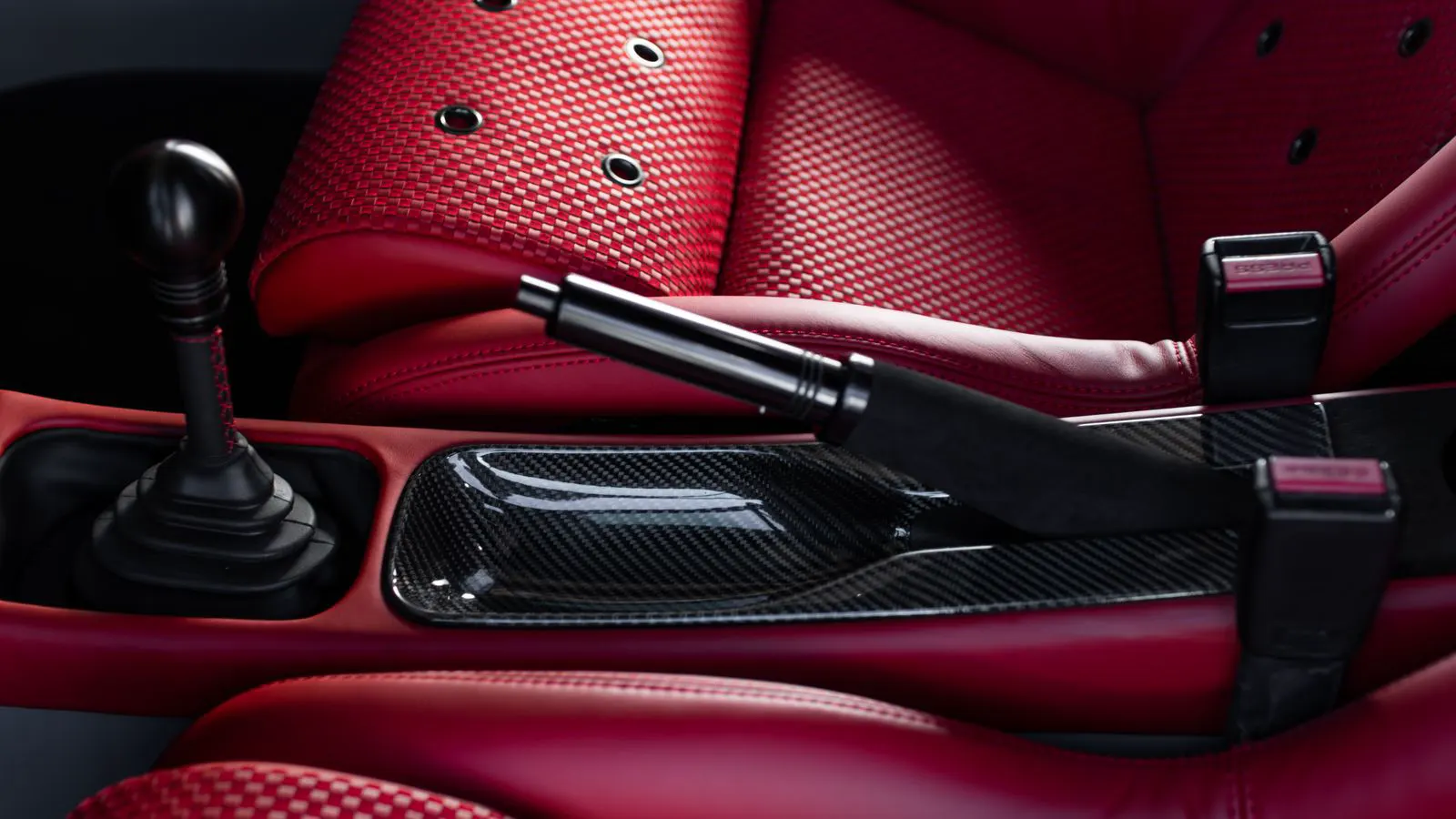
Carbon Fiber Selection Checklist for Engineering Design

The carbon fiber selection checklist verifies material grade, resin compatibility, layup geometry, and processing parameters. It helps engineers confirm that the selected fiber system meets load, thermal, and durability requirements before releasing drawings to suppliers.
- Verify fiber grade, tow orientation, and resin compatibility before freezing design requirements.
- Match layup geometry to the dominant stress path to avoid weak transverse regions.
- Document processing parameters and acceptance criteria to make inspection results traceable.
- Test representative coupons under realistic load and environmental conditions, not just static strength.
Define the load path before choosing fiber
Engineering design starts with the load, not the material. The carbon fiber selection process fails when a team picks a high modulus grade first and then tries to fit the geometry around it. The load path determines where stiffness matters, where strength matters, and where damage tolerance dominates. A bridge deck panel behaves differently from a drone arm, and a turbine blade section behaves differently from an automotive bracket.
Identify the primary and secondary loads. Primary loads are the forces that govern sizing, such as bending, axial tension, or shear. Secondary loads include thermal cycling, vibration, impact, and handling forces. The fiber system must satisfy the primary load with adequate margin, while the secondary loads define the durability and inspection strategy. If the load path is ambiguous, the selection checklist cannot be completed.
Write the requirements in measurable terms. Do not write “high strength.” Write the design load, the safety factor, the service temperature, and the environment. For a carbon fiber selection process, the requirements must be specific enough to distinguish between a standard industrial grade and a specialty grade.
Check the fiber grade and form
The fiber grade determines the mechanical baseline. Industrial grades cover a broad range of modulus and strength. Specialty grades are developed for specific properties, such as higher heat resistance, better impact resistance, or lower thermal expansion. The form of the fiber also changes the performance.
Tow, cloth, and roving are the most common forms. Tow is a continuous bundle of fibers with a fixed count and orientation. It is used for structural layups where stiffness and strength must be controlled. Cloth is a woven or non-woven fabric. It is used where shape stability, draping, and in-plane stiffness are needed. Roving is a bundle of fibers that is not twisted into a continuous strand, and it is often used in pultruded or hand laid parts.
The selection checklist item here is to confirm the fiber count, diameter, and orientation. A tow of 1,200 filaments behaves differently from a tow of 2,400 filaments. The diameter range of industrial fibers is narrow, but the count and the twist rate affect the layup thickness and the resin flow. If the part is thick, the fiber count must be chosen so that the resin can penetrate the core of the layup.
Red flag: The supplier quote lists only “carbon fiber” without a grade, form, and count. If you cannot find the grade on the drawing or the quote, the part is not ready for selection.
Verify resin compatibility and cure schedule
Carbon fiber selection is incomplete without the resin. The resin system determines the matrix stiffness, the interlaminar strength, and the thermal stability. The fiber and resin must be compatible. A high modulus fiber with a low modulus resin can reduce the effective stiffness of the composite. A resin that cures too slowly can trap voids and reduce the quality of the part.
Check the resin properties against the service environment. Heat resistance, chemical resistance, and moisture absorption are the main factors. For outdoor or marine applications, the resin must resist moisture uptake and chemical attack. For high temperature applications, the glass transition temperature of the resin must be above the service temperature with adequate margin.
The cure schedule is part of the selection. The resin datasheet lists the cure temperature, time, and pressure. The production process must match this schedule. If the process cannot hold the required pressure or temperature, the part will not reach its rated properties.
Red flag: The resin selection is made based on price alone. If the resin is cheaper but has lower heat resistance, the part may fail in service. The resin must be selected for the environment, not just for the initial cost.
Match the layup geometry to the part
The layup geometry is the arrangement of the fiber tows or cloth layers. The selection checklist must verify that the layup matches the load path. A unidirectional layup is strong in the fiber direction but weak in the transverse direction. A cross ply layup balances stiffness in two directions but reduces the in-plane stiffness compared to a unidirectional layup.
For bending parts, the fibers must be aligned with the bending axis. The top and bottom layers should be unidirectional if the bending is the dominant load. The core layers can be cross ply or random to provide shear resistance and shape stability. For shear parts, the fibers should be oriented at 45 degrees to the load. For parts that see both bending and shear, a hybrid layup is required.
The selection checklist item here is to review the layup drawing against the load path. If the drawing shows a cross ply layup for a part that is mostly in tension, the part is overbuilt in the transverse direction and underbuilt in the longitudinal direction. The cost goes up without a gain in strength.
Red flag: The layup is copied from a similar part without checking the load difference. A small change in the load path can require a major change in the layup.
Review processing and quality controls
The same fiber and resin can produce parts with very different properties if the processing is different. The selection checklist must verify the processing parameters and the quality controls.
For hand laid parts, the resin transfer method, the vacuum level, and the cure cycle are the main variables. For automated fiber placement, the tape width, the overlap, and the cure schedule matter. For pultrusion, the die temperature, the resin infusion, and the draw rate are critical.
The quality controls must match the part’s criticality. For a structural part, the inspection must include dimensional checks, visual inspection for voids, and non-destructive testing for delamination. For a cosmetic part, visual inspection may be sufficient. The selection checklist must specify the inspection method and the acceptance criteria.
Red flag: The quality plan is generic. If the acceptance criteria are not specific, the supplier will use the minimum standard. Write the criteria on the drawing.
Consider cost, lead time, and supply
Carbon fiber selection includes the supply chain. The cost is not just the material. It includes the tooling, the processing, the inspection, and the waste. A high modulus fiber may reduce the part weight and the cost of the structure, but it may increase the tooling cost and the processing cost.
Lead time is a design constraint. Specialty grades have longer lead times than standard grades. If the project schedule is tight, the selection must include a backup grade. The backup grade must meet the requirements, not just approximate them.
The selection checklist must include the supply data. The fiber count, the resin grade, and the layup pattern must be available from the supplier. If the supplier cannot confirm the availability, the part is not ready for production.
Red flag: The cost estimate is based on a standard grade that is not available. If the grade is not in stock, the cost and lead time will change.
Test representative coupons
The final step is testing. The selection checklist must include a test plan. The test must use the same fiber, the same resin, and the same layup as the part. The test must simulate the service conditions.
For a bending part, the test is a three point bend. For a tension part, the test is a uniaxial tension. For a shear part, the test is a double shear. The test must include a coupon that is representative of the part’s thickness and layup.
The test results must be compared to the design requirements. If the test results are lower than the requirement, the selection is not complete. If the test results are higher, the margin is acceptable. The test must be documented.
Red flag: The test is done on a coupon that is not representative of the part. If the coupon is thinner or has a different layup, the result does not apply to the part.
Carbon Fiber Selection Checklist
- Load path: Define primary and secondary loads. State the design load, safety factor, service temperature, and environment.
- Fiber grade: Confirm the fiber count, orientation, and grade. Match the grade to the required modulus and strength.
- Fiber form: Choose tow, cloth, or roving based on the part shape and processing method.
- Resin: Select the resin for heat resistance, chemical resistance, and moisture absorption. Confirm the cure schedule.
- Layup: Review the layup drawing. Align the fibers with the dominant load path.
- Processing: Verify the processing parameters and the cure cycle.
- Quality: Define the inspection method and the acceptance criteria.
- Supply: Confirm the availability of the fiber, resin, and layup materials.
- Test: Test representative coupons under realistic conditions.
- Documentation: Record all selections and test results on the drawing.
| Checklist Item | What to Verify | Red Flag |
|---|---|---|
| Load Path | Primary and secondary loads are defined. | Load path is ambiguous or copied from another part. |
| Fiber Grade | Count, orientation, and grade are specified. | Quote lists only “carbon fiber” without a grade. |
| Resin Compatibility | Cure schedule matches the process. | Resin is selected based on price alone. |
| Layup Geometry | Fibers align with the dominant load. | Cross ply is used for a tension part. |
| Quality Control | Inspection method and acceptance criteria are defined. | Quality plan is generic or missing. |
| Supply Chain | Availability of all materials is confirmed. | Cost estimate uses a grade that is not in stock. |
| Testing | Representative coupons are tested. | Test coupon is not representative of the part. |
Frequently asked questions
Can I use a standard industrial grade for a high performance part?
No. A standard grade may not meet the required modulus, strength, or heat resistance. The selection must be based on the specific load and environment of the part.
How do I know if the layup is correct?
The layup is correct if the fibers are aligned with the dominant load path. Review the layup drawing against the load path. If the fibers are not aligned, the part is underbuilt in the critical direction.
What is the most common mistake in carbon fiber selection?
The most common mistake is selecting the fiber grade before defining the load path. The fiber grade must be chosen to match the load, not the other way around.
Do I need to test every part?
No. You need to test representative coupons. The test must use the same fiber, resin, and layup as the part. The test results must be compared to the design requirements.
How long does the selection process take?
The selection process takes longer for complex parts. A simple bracket may take a few days. A turbine blade may take months. The time depends on the number of variables and the level of testing required.