How Resin Chemistry Affects Fiberglass Durability
Resin chemistry directly determines fiberglass durability. The type of resin, its cure system, and chemical compatibility control long-term performance. Matching these properties to the service environment prevents premature failure.
- Resin type sets the baseline for chemical, thermal, and mechanical limits of a fiberglass assembly.
- Cure chemistry determines brittleness, toughness, and resistance to environmental stress.
- Sourcing decisions should match resin family, viscosity, and cure profile to the part's service life.
- Material compatibility is a prerequisite for durability. Resin and fiber must share the same expected life.
What Resin Chemistry Means for a Fiberglass Part
Fiberglass is a composite system. The glass fibers carry load, but the resin matrix holds them together. The matrix also protects the fibers from moisture, UV, and chemical attack. If the resin degrades, the whole structure follows.
In practice, “fiberglass” describes the glass reinforcement. The resin is a separate material choice. Two parts can use the same glass roving and yet behave very differently in service. One may stay stiff and strong for decades. The other may soften, crack, or delaminate after a few years.
The resin family, its cure system, and its chemical make-up decide the long-term behavior. Engineers and buyers must treat resin selection as a material decision, not just a cost line.
How Resin Family Shapes Long-Term Behavior
Different resin families have different chemical structures. Each structure responds differently to heat, moisture, and solvents.
Thermoset resins cure into a rigid network. Once cured, they do not melt or flow. This makes them stable under load. The network is permanent. It also means the part cannot be reshaped.
Thermoplastic resins soften when heated. They can be remelted and reformed. This offers repair options. The trade-off is a lower thermal stability ceiling. Parts made from thermoplastic resins may soften before thermoset parts do.
The choice between these families changes what the part can do. A thermoset resin suits a marine hull that will not be remade. A thermoplastic resin suits a component that must be repaired or recycled.
| Resin Family | Typical Use | Long-Term Behavior |
|---|---|---|
| Phenolic | Electrical insulation, tooling | High heat resistance, good chemical resistance |
| Polyester | Marine, automotive, tanks | Moderate cost, variable chemical resistance |
| Epoxy | Structural, aerospace, electronics | High strength, excellent adhesion |
| Vinyl ester | High-performance marine, chemical service | Better chemical resistance than standard polyester |
| Thermoplastic (PP, PE, etc.) | Recyclable parts, low-stress service | Lower heat ceiling, easier repair |
This table shows the general direction of trade-offs. A buyer should not assume that a higher-cost resin is always better. The right resin is the one that matches the service conditions.
Cure Chemistry and Structural Integrity
The resin is only half the story. The cure system determines how the resin becomes solid. Cure chemistry affects brittleness, toughness, and the final hardness of the part.
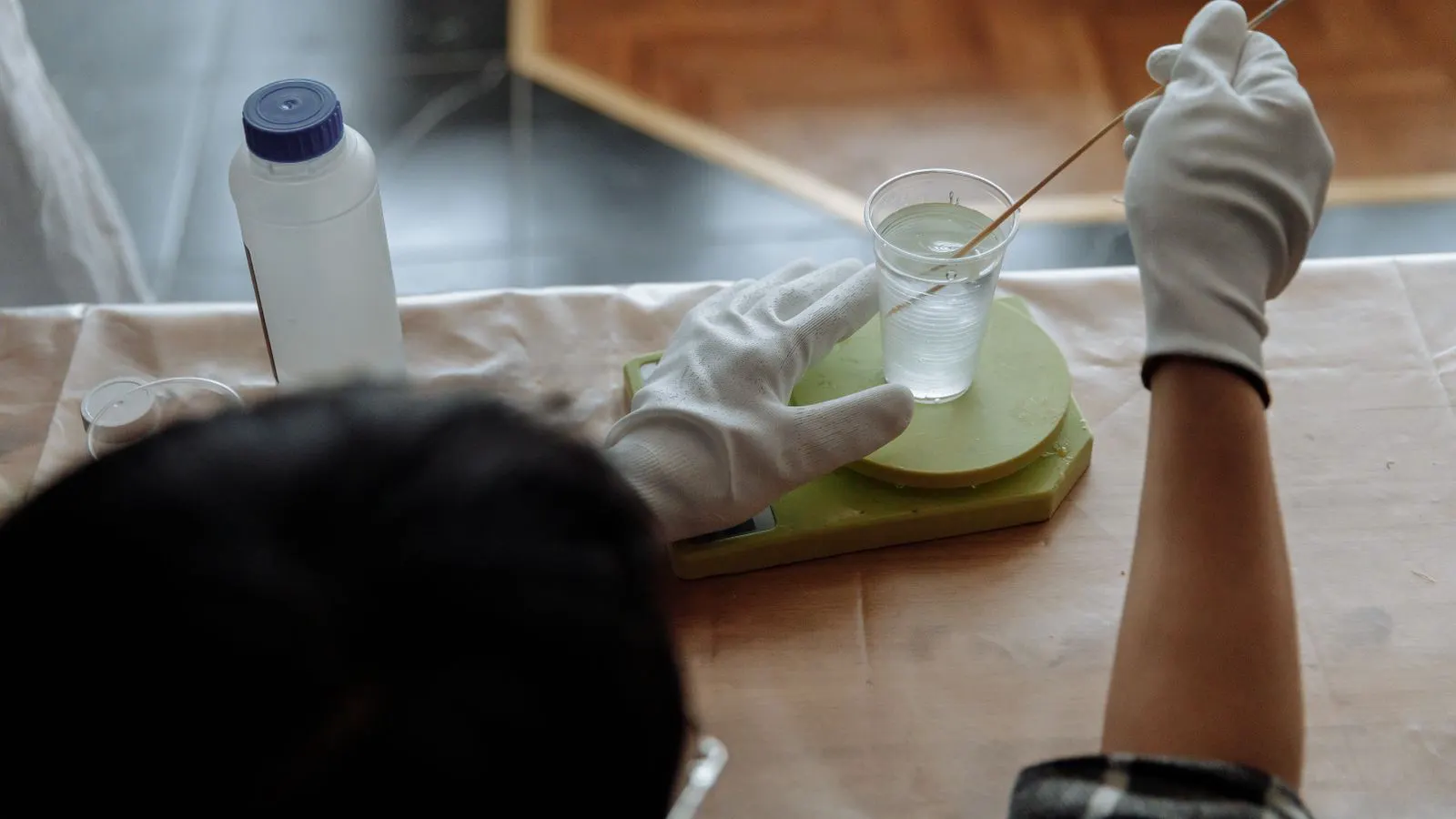
Two-component systems mix resin and hardener. The reaction happens after mixing. The cure time can be adjusted. This is common in structural applications where the part must be handled quickly.
Heat-cured systems require an oven or press. The part cures slowly but completely. The result is a denser, more uniform network. This is typical in high-performance manufacturing.
One-component systems cure by evaporation or exposure to air. They are simple to use. They are also slower and more sensitive to humidity. They are often used for small parts or non-critical applications.
The cure profile changes the internal structure. A fast cure may leave trapped air or incomplete reaction. The part may look fine but have weak points. A slow, controlled cure usually gives a stronger, more reliable network.
A common mistake is to choose a resin based only on price. If the cure system is too fast, the part may not cure fully in thick sections. The center of the part may remain soft. The outer layers may be hard. The result is a part that fails under stress.
Environmental Exposure and Resin Selection
Durability is defined by the environment. A resin that performs well in a garage may fail in a saltwater harbor. A resin that resists UV on a rooftop may degrade in an acid wash.
Moisture is the most common cause of resin failure. Water can penetrate the matrix. It weakens the bond between fiber and resin. This is called debonding. Once the bond fails, the fibers slide against each other. The part loses stiffness.
UV radiation breaks chemical bonds in the resin surface. The surface turns chalky and white. It may look cosmetic, but the underlying chemistry is damaged. The part becomes brittle at the surface.
Chemicals attack specific resin families. Acids, bases, and solvents each target different structures. A resin that resists water may dissolve in a specific solvent.
The choice of resin should be based on the worst-case environment. If the part will sit in fresh water for ten years, the resin must resist that specific water. If it will be exposed to marine saltwater, the requirements are higher.
How Resin Choice Affects Sourcing and Supply
Resin selection drives sourcing decisions. The type of resin determines which suppliers can provide it. It also affects storage, handling, and shelf life.
Shelf life is a real constraint. Two-component resins have a limited time after mixing. Some resins have a long shelf life. Others must be used within weeks. A buyer must know the shelf life before ordering.
Viscosity affects processing. High-viscosity resins are thick. They are hard to mix and apply. Low-viscosity resins flow easily. They are easier to use but may run or sag.
Cost and lead time are linked to resin availability. Common resins like standard polyester are widely available. Specialty resins like high-performance vinyl esters have fewer suppliers. Lead times can be longer. Prices can be higher.
A practical rule is to source resins from suppliers who understand the specific application. A supplier who sells general industrial resins may not know the long-term behavior of a resin in a specific marine environment. A specialist supplier can advise on compatibility and durability.
When comparing quotes, look at the resin family, the grade, and the cure system. Do not just compare the price per kilogram. A cheap resin that fails in six months costs more than an expensive resin that lasts twenty years.
A Worked Example: A Marine Hull Component
Consider a small fiberglass hull that will spend its life in saltwater. The hull is exposed to UV, temperature changes, and constant moisture.
A buyer selects a vinyl ester resin for the main structure. Vinyl ester has better chemical resistance than standard polyester. It is also more flexible. This flexibility helps the part absorb stress without cracking.
The cure system is a two-component epoxy-like system with a long pot life. This allows the crew to apply the resin to the hull without rushing. The slow cure ensures the thick sections of the hull cure fully.
The buyer also checks the resin’s resistance to UV. The resin is formulated with stabilizers. These stabilizers slow the breakdown of the resin surface. The hull will still need a paint system for protection. The resin chemistry supports the paint, but it does not replace it.
In service, the hull does not delaminate. It does not turn brittle. It remains stiff and strong. The resin chemistry was matched to the environment. The part lasts.
If the buyer had chosen a cheap, fast-curing polyester resin, the story would be different. The resin would cure quickly. The part would be stiff at first. But the resin would be brittle. It would crack under stress. The saltwater would penetrate the cracks. The hull would delaminate within a few years.
This example shows how resin chemistry affects durability. The right resin matches the service life. The wrong resin fails.
Choosing the Right Resin for Your Application
Selecting a resin is a decision based on service conditions, not marketing claims. The first step is to define the environment. What will the part touch? What will it see? How long must it last?
The second step is to match the resin family to those conditions. A thermoset resin suits a part that must not soften. A thermoplastic resin suits a part that must be repaired or recycled.
The third step is to check the cure system. A slow, controlled cure usually gives a stronger network. A fast cure is convenient but risky.
The final step is to check the supplier. A good supplier can confirm the resin’s long-term behavior. They can provide data sheets and compatibility information. They can answer questions about shelf life and storage.
Do not rely on a single source. Ask for samples. Test the samples under the expected conditions. If the part is critical, test the resin itself. This is the only way to know if the resin will perform in the real world.
Resin chemistry is the backbone of fiberglass durability. It is not a minor detail. It is the main factor that determines whether the part lasts. A careful choice of resin saves money and prevents failure.
Frequently asked questions
What is the difference between resin and fiber in fiberglass?
The fiber provides strength and stiffness. The resin provides adhesion, protection, and shape. Both are needed for the composite to work.
Which resin is best for outdoor use?
There is no single best resin. UV-stable epoxy or vinyl ester resins are common for outdoor use. The choice depends on the specific exposure and service life.
How does resin affect the weight of a fiberglass part?
The resin adds weight to the part. A denser resin adds more weight. A low-density resin adds less. The choice of resin affects the final part weight.
Can fiberglass be repaired after resin failure?
Yes, if the structure is sound. The damaged area can be removed. A compatible resin can be used to repair the part. The repair must match the original service conditions.
How do I know if a resin is compatible with my fiber?
Check the supplier data sheet. Look for fiber compatibility. Ask the supplier for specific guidance on the fiber type and the application.